

From the Heart of Tripura, Northeast to the Global Stage: Celebrating Culture, Empowering Youth, and Building Peace
In 2014, with a clear mission to promote Tripura’s rich cultural heritage, tourism, arts and crafts, nationalism, and brotherhood—and to raise the state’s global profile—an organization named Yuva Vikash Kendra (YVK) was established. The organization patiently awaited the right moment to make a significant impact, and that moment arrived in 2021 with the celebration of the Golden Jubilee of Tripura’s Statehood Day.
Seizing this opportunity, YVK launched a nationwide campaign titled “Sadbhavana Yatra” to spread messages of peace, unity, and Tripura’s cultural essence across the country. The Yatra, which lasted 53 days, was a remarkable effort to connect communities and promote harmony.
Building on the success of the Yatra, YVK envisioned a grand conclusion to the journey through the organization of an international youth festival—“Heritage Fest”—focused on promoting Tripura’s culture, and fostering peace, harmony, and brotherhood.
Following the successful completion of the Yatra, YVK initiated discussions with the Tripura State Government, particularly with the Hon’ble Chief Minister of Tripura, Prof. (Dr.) Manik Saha. Upon receiving a positive response and full support, YVK collaborated with Vishwa Yuvak Kendra, New Delhi, and the Bajaj Foundation, Mumbai, to plan the first edition of the festival.
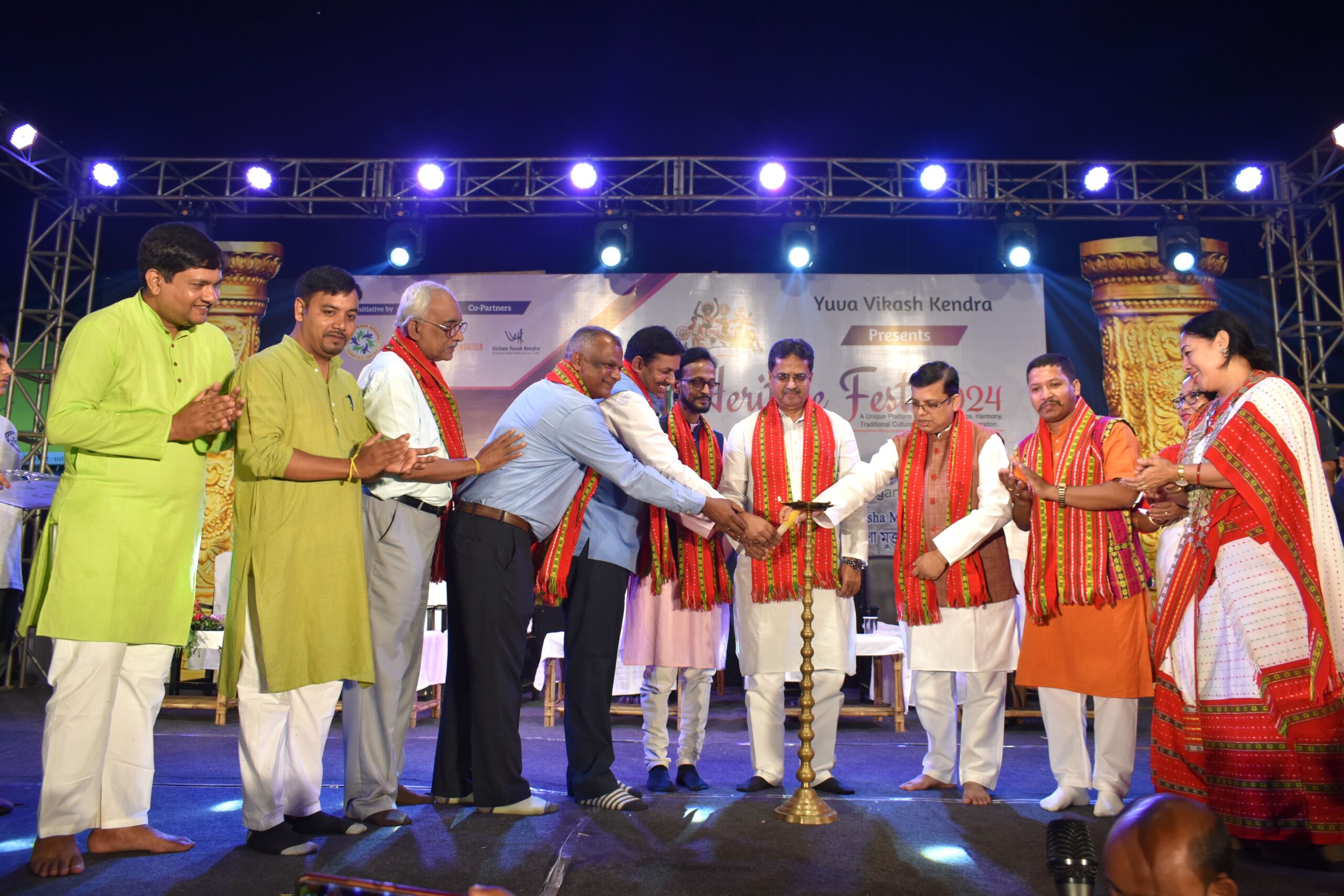
As a result, the first Heritage Fest was organized in Agartala, Tripura, from 20th to 27th November 2022. The festival was formally inaugurated by the Hon’ble Chief Minister of Tripura, Prof. (Dr.) Manik Saha, along with several distinguished guests.
The Heritage Fest was conceived as more than just a celebration—it was a youth-led initiative for inclusive development, national integration, and global peace. The event brought together participants from over 26 Indian states and neighboring countries including Nepal, Bhutan, Bangladesh, USA and Indonesia, fostering cross-cultural dialogue and mutual understanding.
Through folk art, traditional performances, workshops, and discussions, young leaders engaged in exploring shared values and collective identities. A central objective of the fest was to showcase the richness of local crafts, handlooms, and sustainable rural practices, thereby empowering artisans and promoting eco-friendly entrepreneurship. This aligns with YVK’s mission to advance self-reliance and rural development.
Moreover, the festival served as a platform for policy dialogue, innovation, and youth participation in nation-building. Aligned with global values of cultural preservation, youth engagement, and peacebuilding, the Heritage Fest provided a dynamic space where tradition meets innovation, encouraging leadership, inclusion, and unity.
In essence, Yuva Vikash Kendra initiated the Heritage Fest to build bridges—between cultures, communities, and generations—while inspiring youth to become catalysts for sustainable and inclusive development.


Festival Activities – Heritage Fest
Heritage Fest offered a comprehensive schedule of engaging activities aimed at promoting youth leadership, national integration, cultural pride, and community involvement. Each day began with the “Youth Song” and morning meditation & yoga, setting a reflective and energetic tone. Youth participated in Shram Sanskar, a community service activity that included campus cleaning, plantation drives, pond renovation, bazar clinging and hospital sanitation awareness.
Language Exchange Classes were held daily, where participants learned minimum words of Hindi, Bengali, Kokborok, and other regional languages to foster better communication and cultural appreciation. A little understanding of the local language is very helpful for community bonding, better relationships, and clearer communication when you need it. The Discussion Sessions explored vital topics such as international relation & youth development, drug abuse prevention, women’s empowerment, skill development opportunities, Swachh Bharat, Vik agricultural opportunities for youth and farmers, sustainable development, and constitutional values, etc.
Community Games and Talent Exchange Sessions allowed youth to develop camaraderie and showcase their creative skills. The Universal Prayer was a daily evening ritual where participants from diverse faiths gathered to pray together, fostering a spirit of unity and mutual respect. It emphasized the message of peace, harmony, and shared human values, transcending religious boundaries.
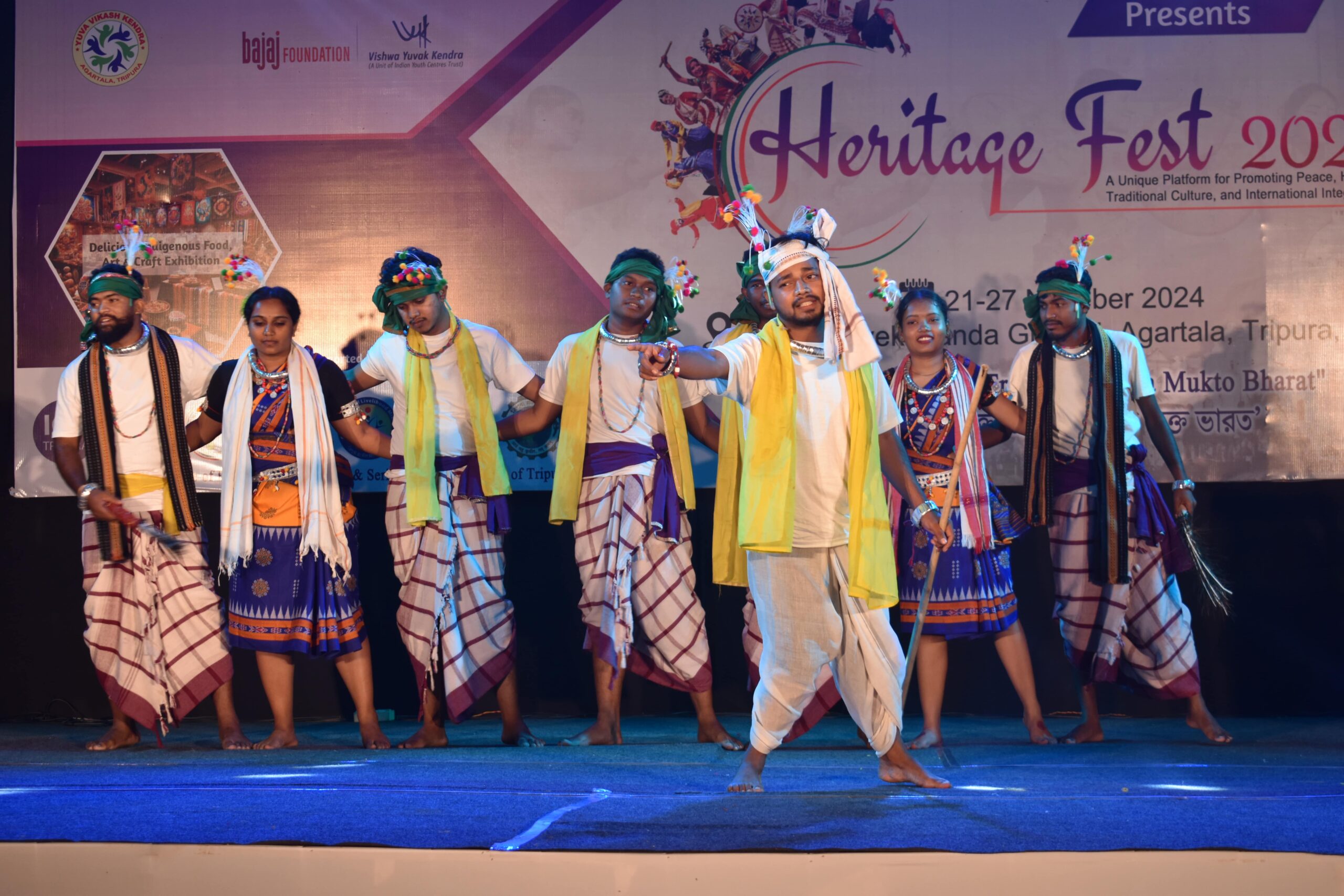
The Cultural Exchange segment of Heritage Fest was one of its most vibrant and enriching components. Participants from Indian states and neighboring countries like Bangladesh, Nepal, Bhutan, and Indonesia showcased their unique folk dances, music, traditional attire, and regional art forms. These performances provided a window into the diverse cultural fabric of India and the subcontinent, allowing participants to experience, appreciate, and learn about each other’s heritage. Through this exchange, the youth built strong emotional and cultural connections, promoting a deeper sense of national unity, cross-border friendship, and mutual respect.
Indigenous Art and Craft Exhibition
The Indigenous Art and Craft Exhibition provides a crucial platform for local and national artisans, Self-Help Groups (SHGs), and farmers to showcase their traditional skills and products. It offers artisans an opportunity to display their handcrafted goods, from textiles and pottery to organic farm produce, connecting them directly with buyers and markets beyond their usual reach. For SHGs, the exhibition acts as a launchpad to promote collective entrepreneurship and strengthen group efforts in preserving indigenous crafts.
Farmers participating in the exhibition can highlight their organic and traditional agricultural products, fostering awareness about sustainable farming practices. The potential of this event lies in empowering these communities economically by opening new income avenues, increasing product visibility, and encouraging innovation while maintaining cultural authenticity.
The outcome is multifold: enhanced livelihoods for artisans and farmers, greater recognition of indigenous crafts at local and national levels, and strengthened community resilience. This exhibition not only supports economic growth but also preserves cultural heritage, boosts rural development, and encourages sustainable practices among grassroots producers.
Objective of the Festival
The primary objective of the festival is to celebrate and promote the rich indigenous culture, heritage, and traditional craftsmanship of India, with a special focus on Tripura and the North Eastern region. It aims to provide a meaningful platform for local and national artisans, Self-Help Groups (SHGs), and farmers to showcase their skills and products, while fostering cultural exchange and national integration.
A key objective of the festival is to promote Tripura and the North East on a global platform, highlighting the region’s unique cultural identity, tourism potential, and artistic excellence. By attracting participants and dignitaries from across India and neighboring countries, the festival aspires to strengthen international cultural ties and open new markets for local artisans and producers.
In addition, the festival encourages youth involvement in nation-building, peace, and harmony; supports economic empowerment through indigenous livelihoods; and promotes sustainable development rooted in traditional knowledge. Overall, the festival serves as a bridge between tradition and modern opportunity, empowering communities while preserving their cultural roots.
Impact of the Festival – Nationally and Globally
The Heritage Fest has made a significant impact both nationally and globally by serving as a vibrant platform for cultural exchange, youth development, and economic empowerment. Nationally, it has successfully brought together hundreds of youth, artisans, and cultural ambassadors from across India—representing over 25 states—fostering a spirit of unity in diversity, national integration, and communal harmony. By promoting indigenous art, language, music, and traditions, the festival has helped revive and preserve local cultures while creating livelihood opportunities for rural artisans and Self-Help Groups (SHGs).
Globally, the participation of international delegates from countries like Bangladesh, Nepal, Bhutan, and Indonesia has elevated the festival’s reach, encouraging cross-border friendship and cultural diplomacy. The inclusion of international performances, exhibitions, and dialogue sessions has positioned Tripura and the North East as important cultural and tourism destinations on the global map.
The festival has also enhanced visibility for local crafts and products in international markets, opening new avenues for collaboration, trade, and recognition. Through media coverage, diplomatic engagement, and social outreach, Heritage Fest has emerged as a beacon of peace, cultural pride, and people-to-people connectivity across borders.